Flashcards· Study
Flashcards that show up at the right time.
Cereby pulls the key terms out of your notes or slides, builds a deck with a hint on every card, and plans spaced review sessions before your exam.


A deck from your own material, not a stranger's
Shared decks are written for somebody else's class. The terms are close but not quite your professor's, the definitions skip the detail your exam asks about, and you spend an evening fixing cards before you can study them. Cereby writes the deck from what you were actually assigned: the slides from Tuesday's lecture, the chapter PDF, the notes you typed in class.
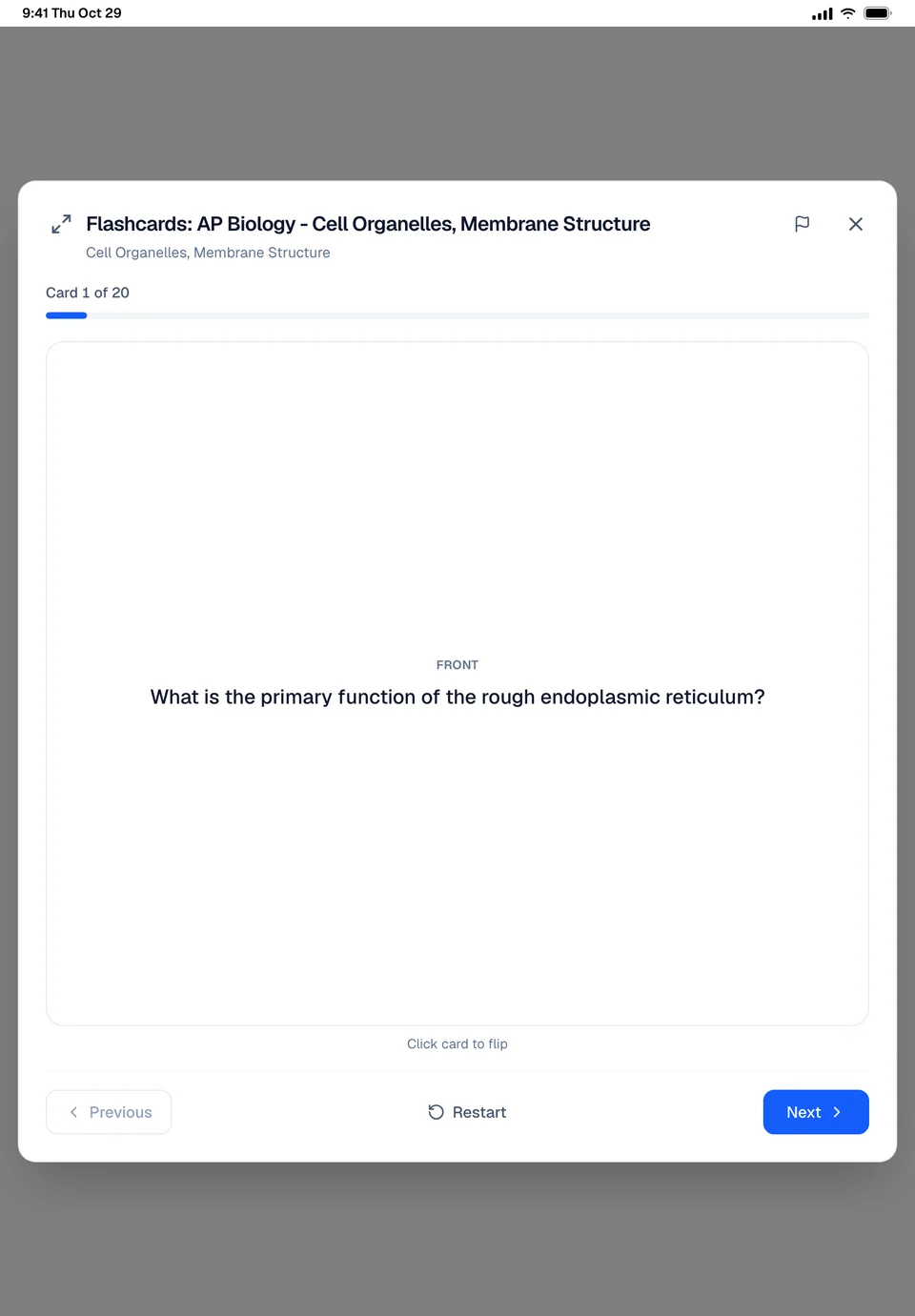
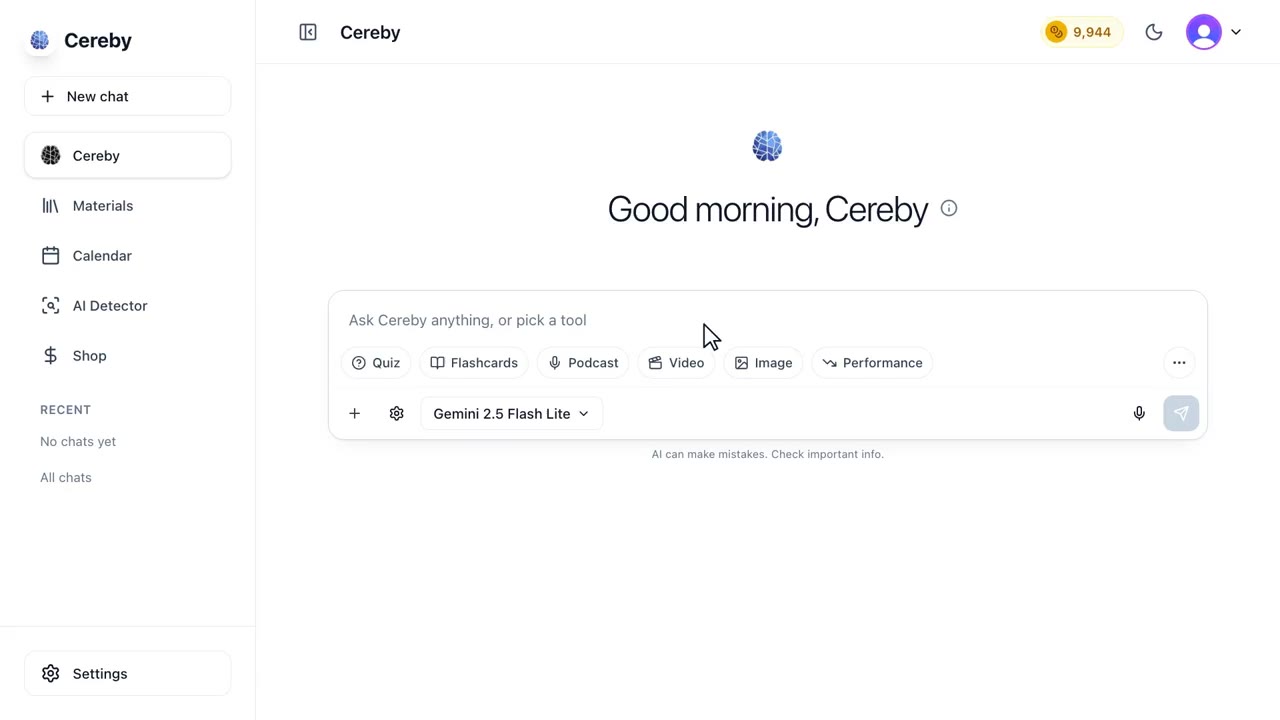
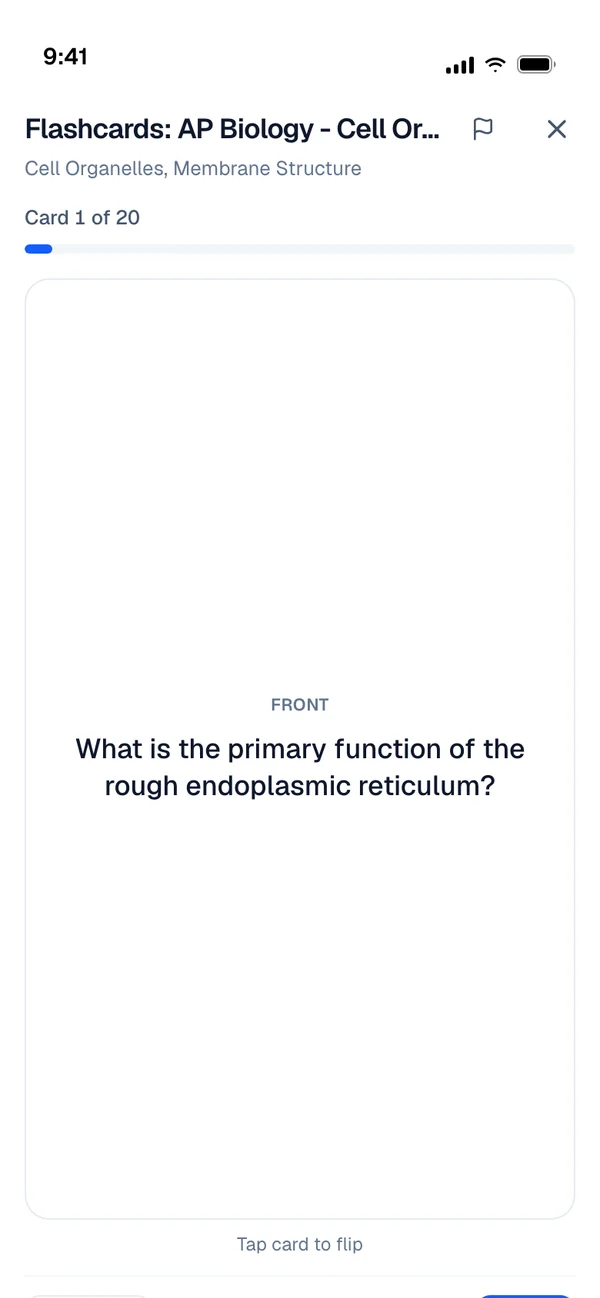
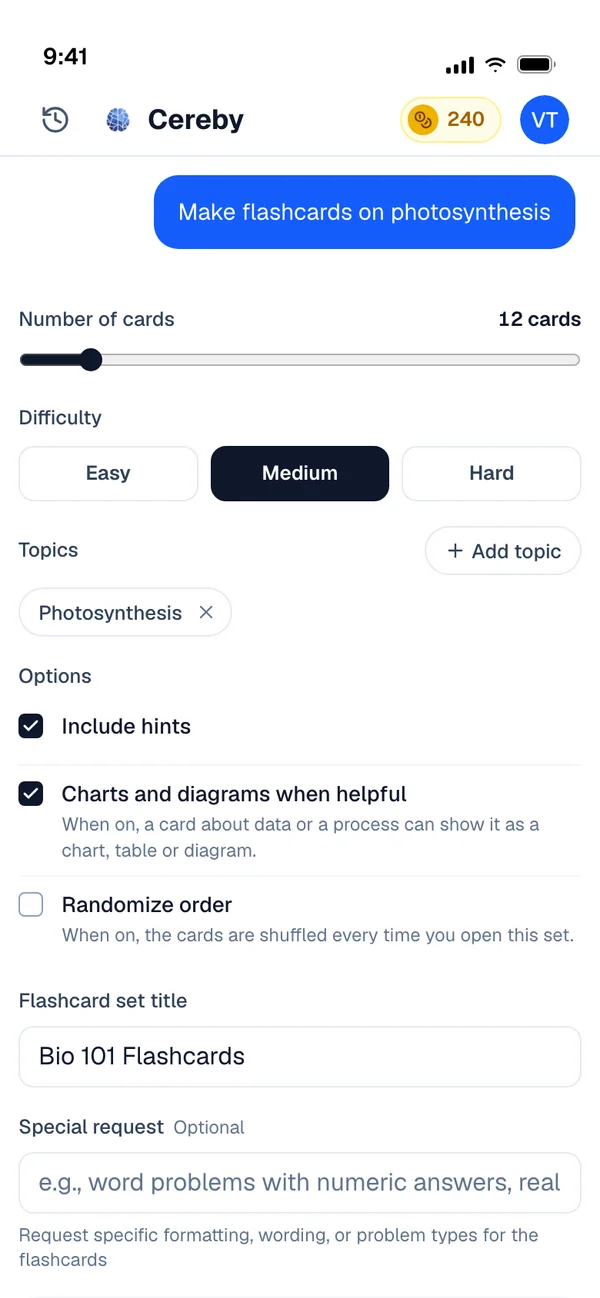
Ask in chat for flashcards on a topic or attach the file, choose how many cards you want and how hard they should be, and the deck appears in your materials. Every card has a front, a back and, unless you switch it off, a hint, so you can nudge yourself toward the answer before flipping instead of giving up and looking.
- 5 to 50Cards in one deck
- 3 levelsEasy, medium or hard
- HintsOn every card unless you switch them off
- OCRScanned pages are read too
What a card looks like
Three cards from a deck built off an organic chemistry lecture on substitution reactions.
- Front
What decides whether a substitution goes SN1 or SN2?
- Hint
Think about the carbon the leaving group is attached to.
- Back
Mostly the substrate. Tertiary carbons favor SN1 because they form a stable carbocation. Methyl and primary carbons favor SN2 because a backside attack is not blocked. The nucleophile and solvent tip the balance for secondary carbons.
- Front
Does an SN2 reaction keep or flip the stereochemistry?
- Back
It flips it. The nucleophile attacks from the side opposite the leaving group, so the center inverts, like an umbrella turning inside out in the wind.
- Front
Which solvent speeds up SN1: polar protic or polar aprotic?
- Back
Polar protic, like water or ethanol. It stabilizes the carbocation and the leaving group while they are apart.
Flashcards in three steps
Attach what you're studying
A PDF, a slide deck, a Word doc, a photo of the whiteboard or a note you already have in Cereby. Or just name the topic.
Pick the size and difficulty
Anywhere from 5 to 50 cards, easy, medium or hard, with hints on or off. Cereby pulls the key terms and builds the deck.
Flip, mark and review
Flip each card, peek at the hint if you need it, and mark it right or wrong. Your score is saved, so the next deck can aim at the cards you missed.
Made for weeks like these
Cramming organic chem the week of finals
Turn every mechanism slide into cards in one sitting, then spend the week flipping instead of formatting.
Anatomy terms that all sound the same
Build a deck per region of the body so the brachial plexus does not blur into the lumbar plexus the night before the practical.
Vocabulary for a language class
Paste the chapter's word list and get cards with a hint for each, so you practice recalling the word rather than recognizing it.
Licensing exam review
Upload your NAPLEX or NCLEX review notes and work through them a deck at a time between shifts.
Flashcards: common questions
If your question isn't here, ask anything in the chat. A real person answers.
Related

Your next exam starts here.
Bring your syllabus. Cereby learns your schedule, tracks what's due and turns every topic into the video, podcast, quiz or deck you'll actually study from. Free to start, no card required.